
 Kia Rio: Radiator: Removal and Installation
| 1. |
Disconnect the battery negative terminal.
|
| 2. |
Remove the air cleaner assembly. (Refer to Intake and exhaust
system in this group)
|
| 3. |
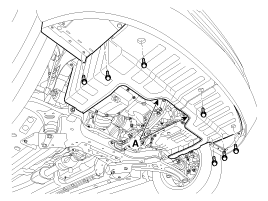
Remove the under covers (A).
|
| 4. |
Loosen the drain plug and drain the coolant. Open the radiator
cap to make rapid draining.
|

| 5. |
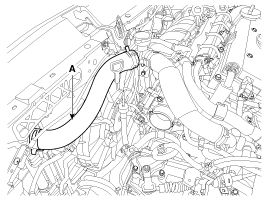
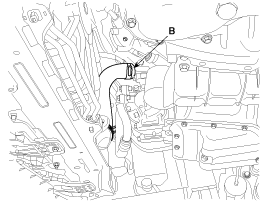
Remove the radiator upper hose (A) and lower hose (B).
|

| 6. |
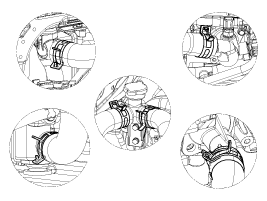
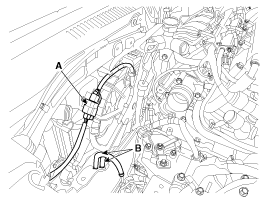
Disconnect the fan connector (A) and the ATF cooler hoses (B)(A/T
only). (Refer to AT group)
|
| 7. |
Remove the front bumper. (Refer to BD group)
|
| 8. |
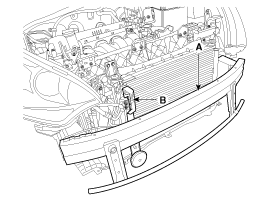
Remove the rail (A) and the air guard (B).
|
| 9. |
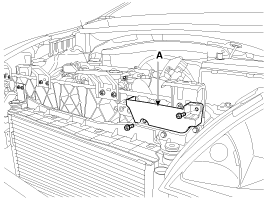
Remove the cover (A).
|
| 10. |
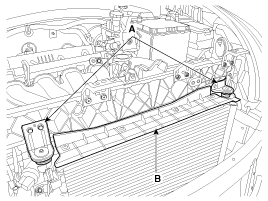
Remove the upper cover (A) and the radiator mounting brackets
(B).
|
| 11. |
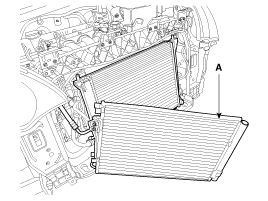
Remove the A/C condenser (A) from the radiator assembly and then
lift up the radiator assembly (B).
|
| 12. |
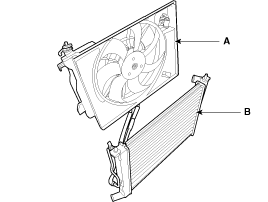
Remove the cooling fan (A) from the radiator (B).
|
| 13. |
Installation is reverse order of removal.
|

 Radiator: Inspection
Radiator Cap Testing
1.
Remove the radiator cap, wet its seal with engine coolant, then
install it to pressure tester.
2.
Apply ...
See also:
Components
1. Transaxle mounting bracket
2. Roll rod bracket
3. Engine mounting bracket
4. Engine mounting support bracket
...
Ignition Coil: Specification
Item
Specification
Primary Coil Resistance (Ω)
0.75 ± 15% [20°C (68°F)]
Secondary Coil Resistance (kΩ)
5.9 ± 15% ...
Removal
Wiper and Washer Switch
1.
Disconnect the negative (-) battery terminal.
2.
Remove the steering wheel.
(Refer to the ST group - &qu ...
Categories
- Kia Rio Manuals Home
- Kia Rio YB 2017-2026 Owners Manual
- Kia Rio YB 2017-2026 Service Manual
- Kia Rio UB 2012-2017 Owners Manual
- Kia Rio UB 2012-2017 Service Manual
- Downloads

Copyright © www.kirmanual.com 2014-2026